
Engineering Knowledge Base

Technical insights, thermal boundary analyses, and motor selection protocols designed for global R&D engineers and procurement specialists.

Featured Engineering Deep-Dives

Practical analyses addressing real-world motor failure modes, duty cycles, and noise control.
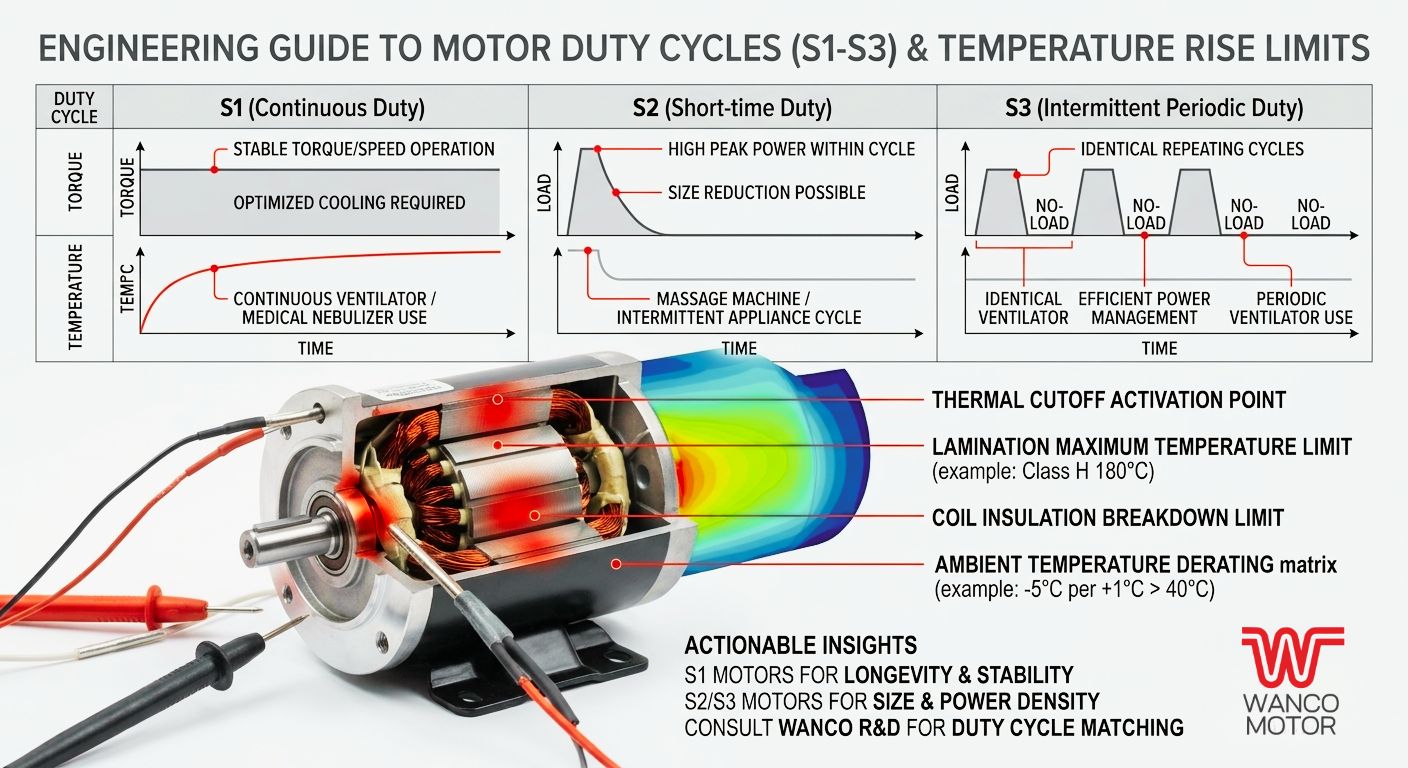
Thermal Management Motor thermal rise limit test data chart demonstrating S1 to S3 duty cycle load capabilities.

S1 vs. S3 Duty Cycle: Thermal Rise in Shaded Pole Applications

Operating an intermittent (S3) Shaded Pole motor under continuous duty leads to rapid insulation degradation. Learn how stack height and copper resistance adjustments mitigate heat buildup.
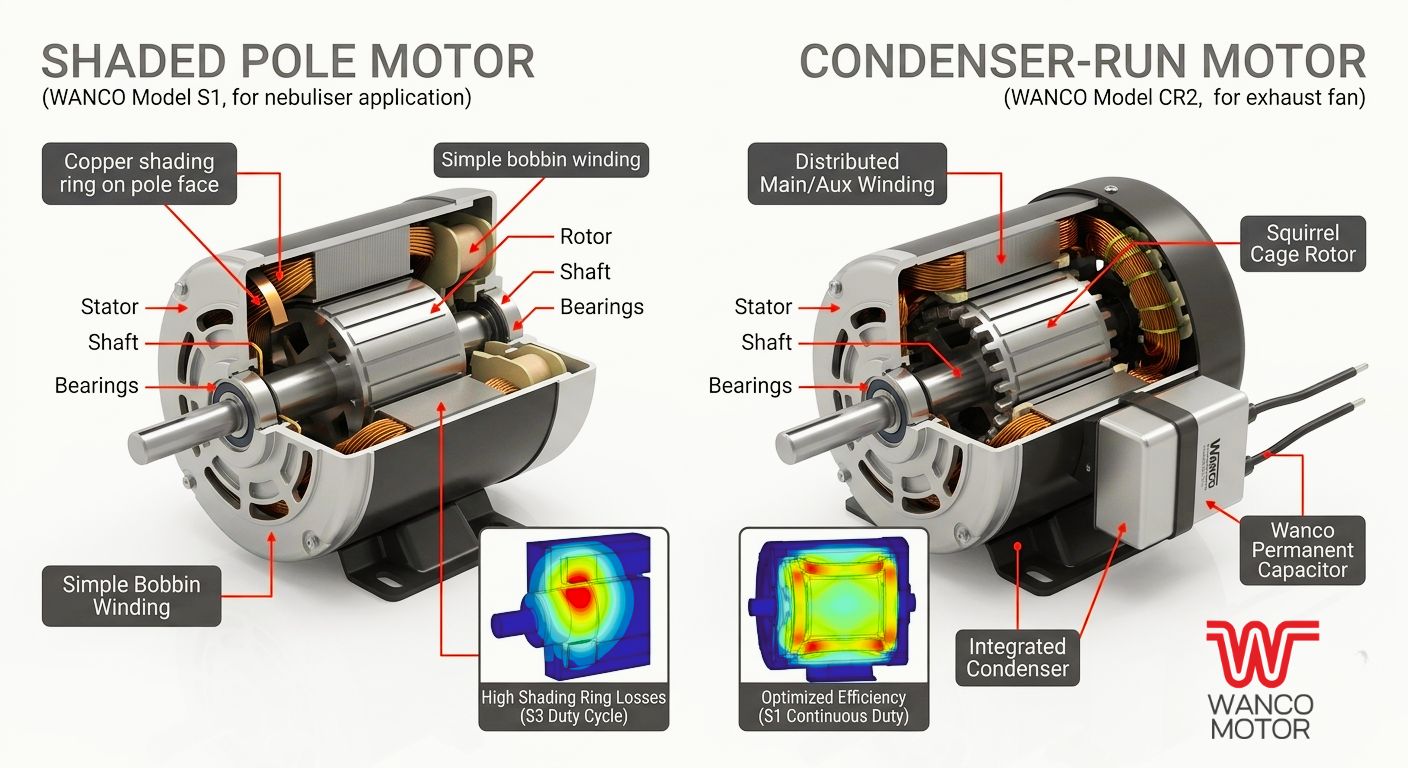
NVH & Acoustic Control Engineering comparison diagram between Shaded Pole and Condenser-Run motor topologies and internal structures.

Mitigating Resonance & Vibration in Medical Nebulisers & Blowers

How precision rotor dynamic balancing, sleeve bearing tolerances, and rubber isolators directly lower decibel levels and operational harshness in medical appliances.
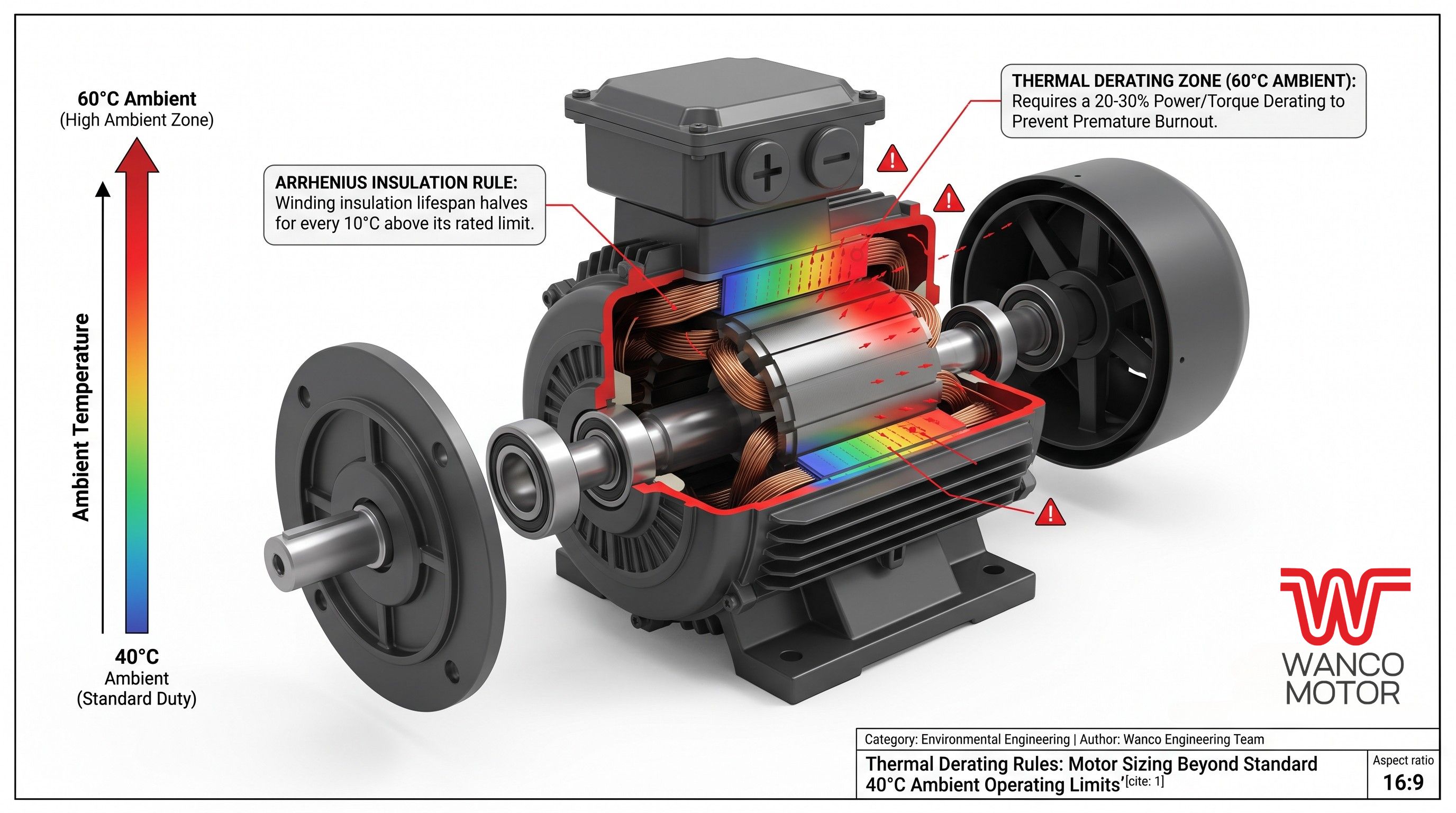
Environmental Selection Thermal derating curve and insulation class selection guide for AC motors in high-heat industrial environments.

Thermal Derating Rules Beyond Standard 40°C Ambient Limits

Operating motors in high-heat industrial enclosures requires precise torque derating, Class F/H insulation selection, and thermal cut-off calibration to ensure continuous reliability.

Technical & Procurement Selection FAQ

Comprehensive R&D guidelines covering motor topology, cost-structure drivers, and supplier audit criteria.

Under what operational conditions or application scenarios should an AC motor be selected over a DC motor?

Selecting between an AC and DC motor depends primarily on power source availability, control requirements, continuous operating duty, and total cost of ownership (TCO). An AC Motor (such as a Shaded Pole Motor or Condenser-Run Motor) is the optimal choice under the following conditions:

  • Direct AC Mains Operation: When the application operates directly off standard wall power (110V–240V AC) without requiring additional AC-to-DC rectifiers, power supplies, or complex electronic drivers, significantly reducing total system BOM (Bill of Materials) cost.
  • Continuous Duty (S1 Duty Cycle) & Long-Term Reliability: AC induction motors have fewer wearable electronic components. For applications running continuously—such as heating fans, exhaust ventilation, or medical fluid pumps—AC motors provide thermal stability and low maintenance over long service lifespans.
  • Cost-Sensitive, Fixed-Speed Applications: For equipment requiring constant speed under steady load (e.g., household appliances, industrial stand fans, vibrating equipment), AC motors offer an unbeatable cost-to-performance ratio compared to brushless DC (BLDC) systems.
  • Harsh Industrial Environments: AC motors are generally more tolerant of ambient temperature fluctuations and electrical noise (EMI) compared to sensitive DC control boards.
Why is there such a significant price disparity among motors in the market that share the exact same nominal specifications?

Nominal ratings (e.g., voltage, speed, rated power) only describe a motor's baseline output on paper. The vast price differences stem from hidden material choices, structural engineering, and quality control rigor:

Cost Factor High-Standard Motor (e.g., Wanco Standard) Low-Cost Alternative
Winding Material 100% Pure Copper Wire (High conductivity, lower thermal rise, long life). Copper-Clad Aluminum (CCA) (High resistance, prone to overheating and early burnout).
Magnetic Core High-grade cold-rolled silicon steel laminations (Low iron loss, high efficiency). Low-grade recycled steel sheets (High eddy current losses, severe heat buildup).
Bearings & Lubrication Precision ball bearings or high-temp synthetic sleeve bearings rated for continuous operation. Cheap sleeve bearings with poor lubrication that dry out and lock up quickly.
Thermal Insulation & Safety Class B or Class F insulation with integrated thermal cutoffs / fuses. Low-temp insulation lacking proper thermal protection.
Quality Assurance 100% Full-Performance QC inspection prior to shipping. Spot-checking or zero factory load testing before shipment.
Compliance & Safety Certified ISO 9001:2015, RoHS compliance, and CE marking. Uncertified materials; risks of customs seizure or safety liability.
How can procurement managers and R&D engineers effectively evaluate and identify a high-quality motor supplier?

Evaluating a motor supplier requires looking beyond glossy catalogs and focusing on manufacturing heritage, direct factory capability, customization flexibility, and international compliance. Key evaluation criteria include:

  • 1. Proven Manufacturing Track Record & Direct Export Experience: A reliable supplier should have an established history (e.g., Wanco’s manufacturing roots dating back to 1976) and proven global export validation across demanding markets like Europe (40%), the Americas (30%), and Asia (30%).
  • 2. OEM/ODM Engineering Customization Flexibility: Off-the-shelf motors rarely meet complex R&D specs. A quality supplier evaluates specific work parameters—such as Duty Cycle, ambient operating limits, torque curves, and noise thresholds—to deliver customized winding and shaft configurations.
  • 3. Auditable Quality Management & Environmental Compliance: Ensure the manufacturer holds verifiable ISO 9001:2015 certification, guarantees 100% performance QC testing on finished goods, and provides certified RoHS and CE compliance to prevent regulatory barriers in Western markets.
  • 4. Application-Specific Industry Expertise: Look for suppliers with a proven track record in high-reliability fields—such as medical equipment (nebulisers, fluid pumps), ventilation systems, and industrial equipment—where motor failure directly impacts end-product reputation.

Have a Custom R&D Motor Boundary Requirement?

Submit your technical parameters through our structured R&D questionnaire for an engineering evaluation within 24-48 hours.

WhatsApp Us